Nuestra pasión por el lino no deja de crecer; os presentamos nuestros nuevos linos, de Les Créations, cinco colecciones con distintos diseños que se adaptan a las estancias más elegantes y agradables. Su delicadeza nos lleva a un mundo luminoso y fresco, y es que nos encanta cómo pasa la luz sutilmente entre sus hilos.


Y para gustos “Gothenburg” es un interesante tejido en lino 100% con la clásica estructura “slubby linen” en una paleta de 40 colores.


Y como estas Colecciones reflejan luminosidad y colorido vamos a dedicar este artículo a la luz vista desde diferentes disciplinas y a hablar del color desde distintos puntos de vista. Algo que parece tan básico y elemental como el color, en realidad esconde muchas cosas muy interesantes. Esperamos que os guste.
Como arte
James Turrell. Si tenemos que escoger un artista que trabaje con la luz escogemos, sin duda, a James Turrell. Él es el maestro. Toda su obra gira alrededor de ésta y es que en cada una de sus piezas de arte busca crear una sensación, un escenario, una emoción utilizando únicamente la sensibilidad y la magia propia de la luz.


Como fotografía
“Fotografía” proviene del griego phos (que significa luz) y graf (que significa dibujo), por lo tanto fotografía significa dibujar con la luz, una preciosa definición, igual que los visillos dibujan la luz con sus transparencias y su sutileza. Nos gustaría mostrar la primera fotografía jamás captada. La foto está hecha por Joseph Nicéphore Niépce en 1826. Consiguió su primera imagen (positivo directo) permanente de la vista desde su ventana en Le Gras, utilizando una cámara oscura y como material sensible a la luz una mezcla de betún de Judea. El tiempo de exposición necesario para obtener esta imágenes fue muy largo: varias horas en un día soleado.
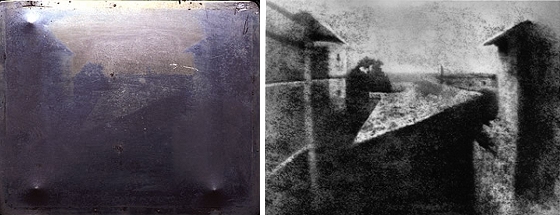
Foto de Joseph Nicéphore Niépce en 1826
Como arquitectura
John Pawson. Pawson es uno de los arquitectos contemporáneos más reconocidos. Su trabajo se enfoca principalmente en resolver problemas fundamentales relacionados con el espacio, la proporción, los materiales y sobre todo la luz. Nos encanta los espacios que crea tan limpios y sobrios, claramente se ve la influencia japonesa en su trabajo, donde la luz tiene una presencia casi celestial, quizás es por esa la razón por la que ha realizado la reconstrucción de numerosas iglesias.


El color en el arte
Ha habido un montón de artistas que han basado su obra en el estudio del color y los efectos que éste provoca en la profundidad, la forma y, además, en los sentimientos del espectador. Josef Albers hizo numerosos estudios sobre el color, en 1963 publicó “Interacción del Color” que presentaba su teoría de que los colores se rigen por una lógica interna y engañosa. Wassily Kandinsky veía colores cuando escuchaba música y pensaba que el color podía plasmar visualmente el timbre, el tono y el volumen de la música. O los cuadros de Rothko, cuya finalidad fue la de provocar sensaciones en el espectador. Sus obras más conocidas están formadas por bloques de color rectangulares que parecen flotar sobre un fondo liso, técnica que recibió el nombre de color “field painting”. En una famosa conversación que tuvo en 1957 con el escritor Selden Rodman, habló de su arte de esta forma:
“No soy un pintor abstracto […] No me interesan las relaciones entre colores y formas […] Sólo estoy interesado en expresar las emociones básicas del ser humano (tragedia, éxtasis, fatalidad…) y el hecho de que mucha gente se descomponga y llore ante mis cuadros demuestra que he conseguido comunicar esas emociones básicas. Cuando la gente llora ante mis cuadros están teniendo la misma experiencia religiosa que yo mismo tuve cuando los pintaba. Y si usted, como dice, sólo se emociona por la relación entre los colores, es que no lo ha entendido.”


El color en la ciencia
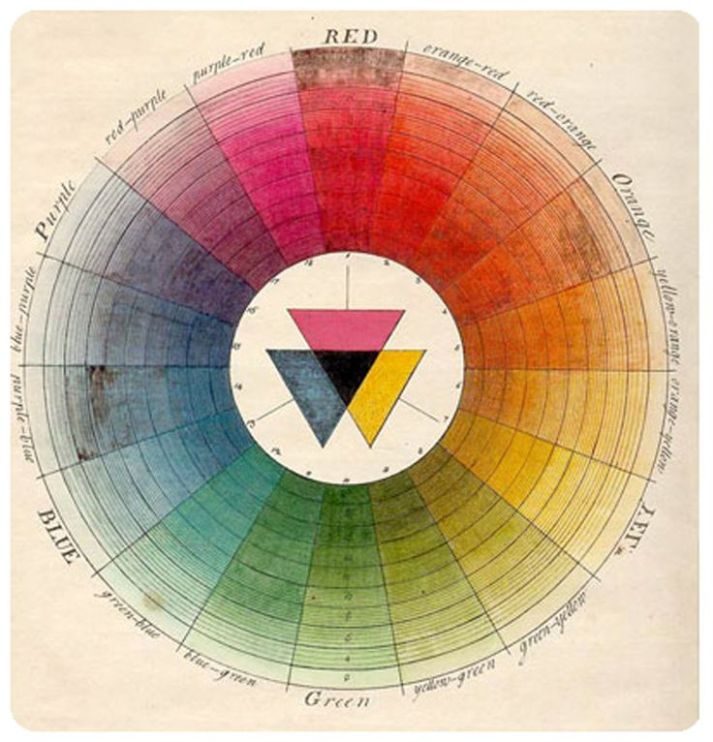
Johann Wolfgang von Goethe. El gran escritor e intelectual Johann Wolfgang von Goethe es, además, el maestro precursor de la psicología del color como tal. Sentó las bases de la psicología del color a principios del siglo XIX, destacando la percepción humana como el aspecto olvidado por las teorías newtonianas. Con “Zur Farbenlehre”, título en alemán de “Teoría de los Colores”, obra publicada en 1810, Goethe dio un papel primordial a la percepción del color, al aspecto subjetivo de éste, atribuyéndole un valor determinado, una especie de personalidad a los colores. Su estudio se basa en analizar el efecto del color en la percepción y la conducta humana.
El color en la psicología
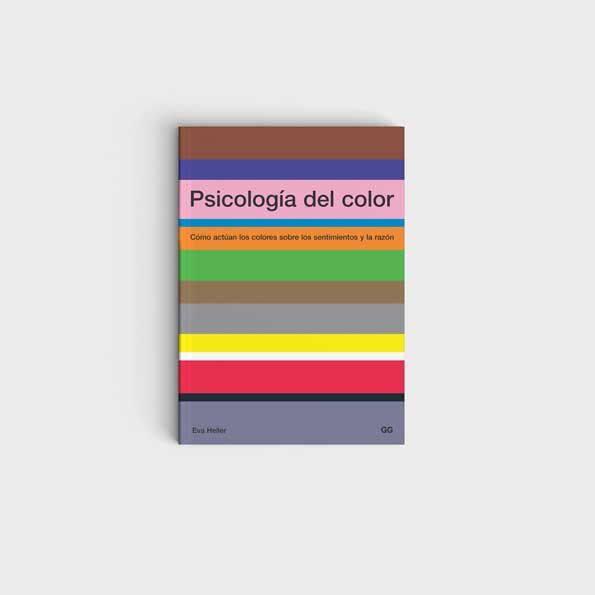
“Psicología del color: cómo actúan los colores sobre los sentimientos y la razón” es un libro teórico escrito por la socióloga y psicóloga Eva Heller. El estudio está basado en una encuesta realizada a 2.000 personas y demuestra que los colores y los sentimientos son, contradiciendo a lo que decía Goethe a principios del siglo XIX, “experiencias universales profundamente enraizadas desde la infancia en nuestro lenguaje y nuestro pensamiento”, lo cual puede explicarse, como hace a lo largo del libro, mediante el simbolismo psicológico y la tradición histórica.
ENGLISH
Our passion for linen does not stop growing, we present our new linens, from Les Créations, five collections with different designs that adapt to the most elegant and pleasant stays. Its delicacy leads us to a bright and fresh world, and is that we love how the light passes subtly between its threads.
And for tastes «Gothenburg» is an interesting fabric in linen 100% with the classic structure «slubby linen» in a palette of 40 colors.
And as these collections reflect brightness and color we will dedicate this article to the light seen from different disciplines and to talk about color from different points of view. Something that looks as basic and elemental as color, actually hides many very interesting things. We hope you like it.
As Art
If we have to choose an artist who works with the light we undoubtedly choose James Turrell. He is the master. All his work moves around it and each of his pieces of art seeks to create a sensation, a stage, an emotion using only the sensitivity and magic of light.
As Photography
“Photography” comes from the Greek phos (meaning light) and graf (meaning drawing), so photography means drawing with light, a beautiful definition, just as the curtains draw the light with its transparencies and subtlety. We would like to show the first photograph ever captured. The photo was made by Joseph Nicéphore Niépce in 1826. He obtained his first permanent (direct positive) image of the view from his window in Le Gras, using a dark camera and as light sensitive material a mixture of Judea bitumen. The exposure time needed to obtain these images was very long: several hours on a sunny day.
As Architecture
John Pawson. Pawson is one of the most recognized contemporary architects. His work focuses mainly on solving fundamental problems related to space, proportion, materials and especially light. We love the spaces that he creates so clean and sober, he clearly sees the Japanese influence in his work, where the light has an almost celestial presence, perhaps for that reason he has carried out the reconstruction of numerous churches.
The color in the arts
There have been a lot of artists who have based their work on the study of color and it effects on depth, shape and the feelings of the viewer. Josef Albers made numerous studies on color, in 1963 he published “Interaction of Color” which presented his theory that colors are governed by an internal and deceptive logic. Wassily Kandinsky saw colors when he listened to music and thought that color could visually shape the tone and volume of music. Or Rothko‘s masterpieces, whose purpose was to provoke sensations in the viewer. His best known works are formed by rectangular blocks of color that seem to float on a smooth background, technique that received the name of color “field painting”. In a famous conversation he had in 1957 with the writer Selden Rodman, he spoke of his art in this way:
“I am not an abstract painter […] I am not interested in the relationships between colors and forms… I am only interested in expressing the basic emotions of the human being (tragedy, ecstasy, fatality …) and the fact that many people get emotional and cry to my paintings shows that I have managed to communicate these basic emotions.When people cry in front of my paintings they are having the same religious experience that I had when I painted them. And if you, as you say, are only moved by the relationship between colors it means that you have understood nothing.”
Color in science
The great writer and intellectual Johann Wolfgang von Goethe is also the precursor master of the psychology of color. He laid the foundations of color psychology in the early nineteenth century, emphasizing human perception as the aspect forgotten by Newtonian theories. With “Zur Farbenlehre”, German title of “Theory of the Colors”, work published in 1810, Goethe gave a primordial role to the perception of the color, to the subjective aspect of it, attributing a determined value to it, a kind of personality to the colors. His study is based on analyzing the effect of color on human perception and behavior.
Color in psychology
“Psychology of color: how colors act on feelings” is a theoretical book written by sociologist and psychologist Eva Heller. The study is based on a survey of 2,000 people and shows that colors and feelings are, in contradiction to what Goethe said at the beginning of the 19th century, “universal experiences deeply rooted from childhood in our language and our thinking”. Which can be explained, as it does throughout the book, through psychological symbolism and historical tradition.
 ARTE VILLA